
What is Upcheck?
Core Features
- Certificate Lifecycle Monitoring
- DNS Change Detection
- Domain Renewal Alerts
Pricing Details
Ideal For
Use Upcheck as an Alternative to
Detailed Description
Never find out your site is down from a customer. Upcheck checks every site you own for uptime, SSL/TLS certificate expiry, DNS changes and domain renewal — and, when you ask, a page’s text, a price, a TCP port or an API endpoint — and warns your team by email, Slack, Discord or Teams before anything breaks. No agent, no DNS change, no code on your side. Pricing starts at $10 base per month plus $1 per site, per month, and you can cancel anytime.
How it works
✨ Upcheck watches every site you own across uptime, certificates, DNS, domains, pages, ports and APIs
✨ The first four are watched from the moment you add a site; the rest begin the moment you point at something
✨ A real HTTPS request is confirmed twice before anyone is paged, with response time kept on every probe
✨ The same probe can be aimed at an API endpoint, with a path, request headers, the status it should return, text its body must hold and a latency limit
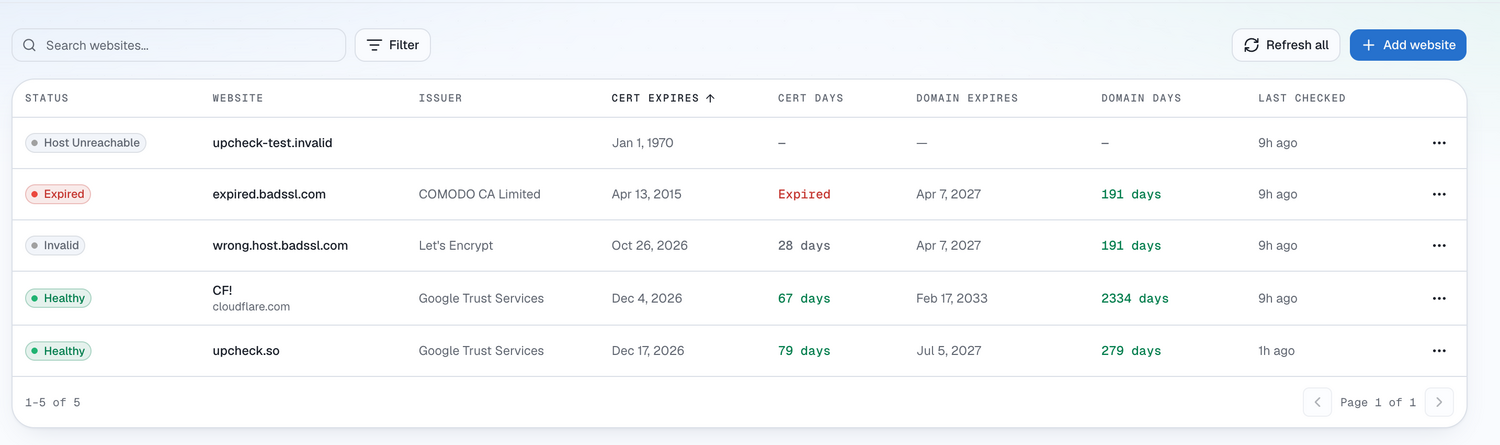
✨ A real TLS handshake checks validity, chain, hostname coverage and expiry, with warnings at the thresholds you set
✨ DNS record sets are fingerprinted against the last, so a moved A, AAAA, NS or MX record is an alert and rotation is not
✨ Domain expiry and registry holds are tracked over RDAP, weeks before a missed invoice takes the name down
✨ Page checks confirm a phrase that should be on a page, or should not — a login button present, “Out of stock” absent
✨ Price and element checks compare a page, an element or the first number in it with the previous probe, with before and after in the alert
✨ TCP connects to SSH, a database, mail or a game server, on the site itself or the origin behind it
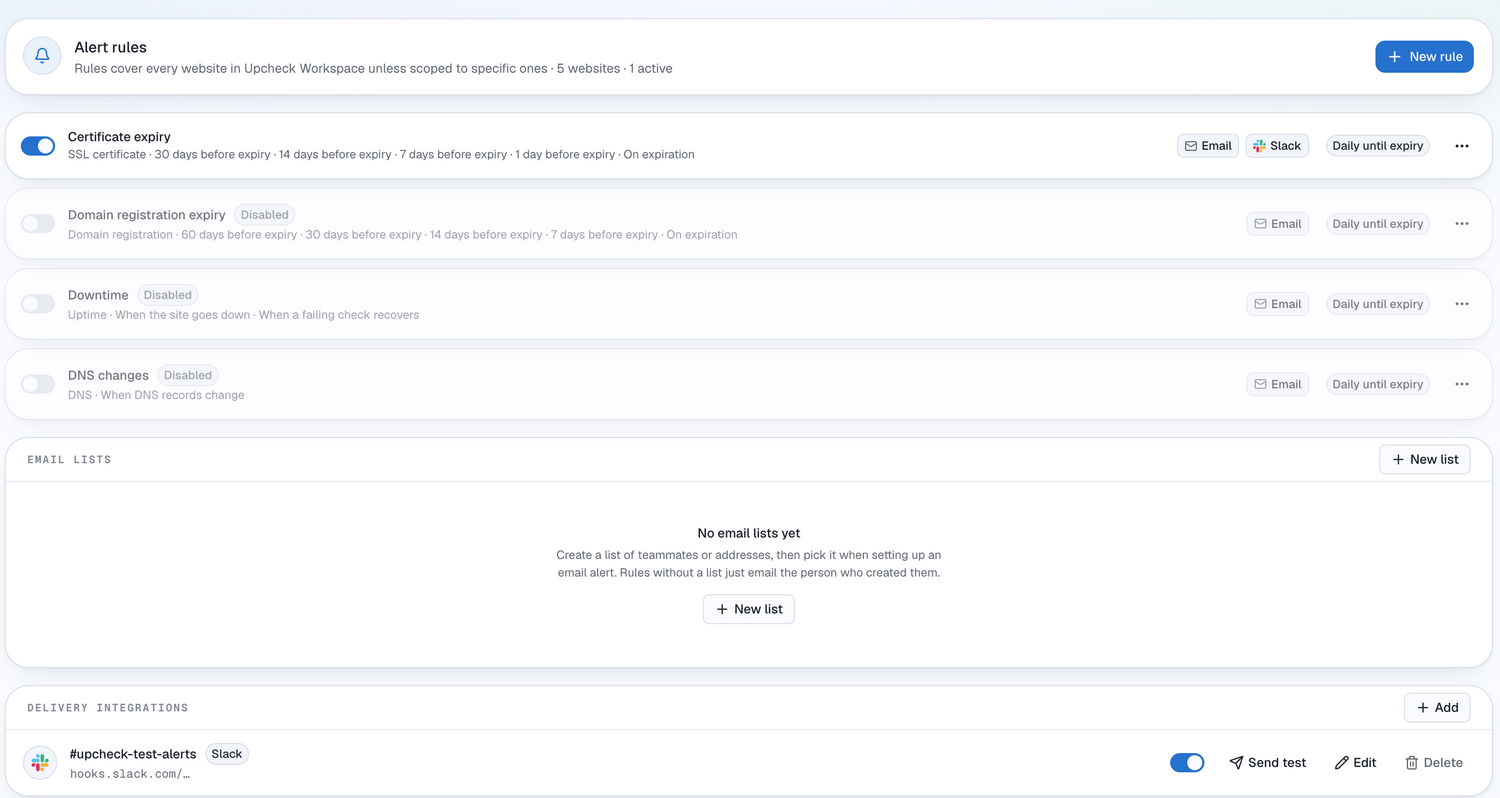
✨ Warnings reach five places, with reusable recipient lists so a rule points at a group of people rather than a column of addresses
The whole life of a certificate
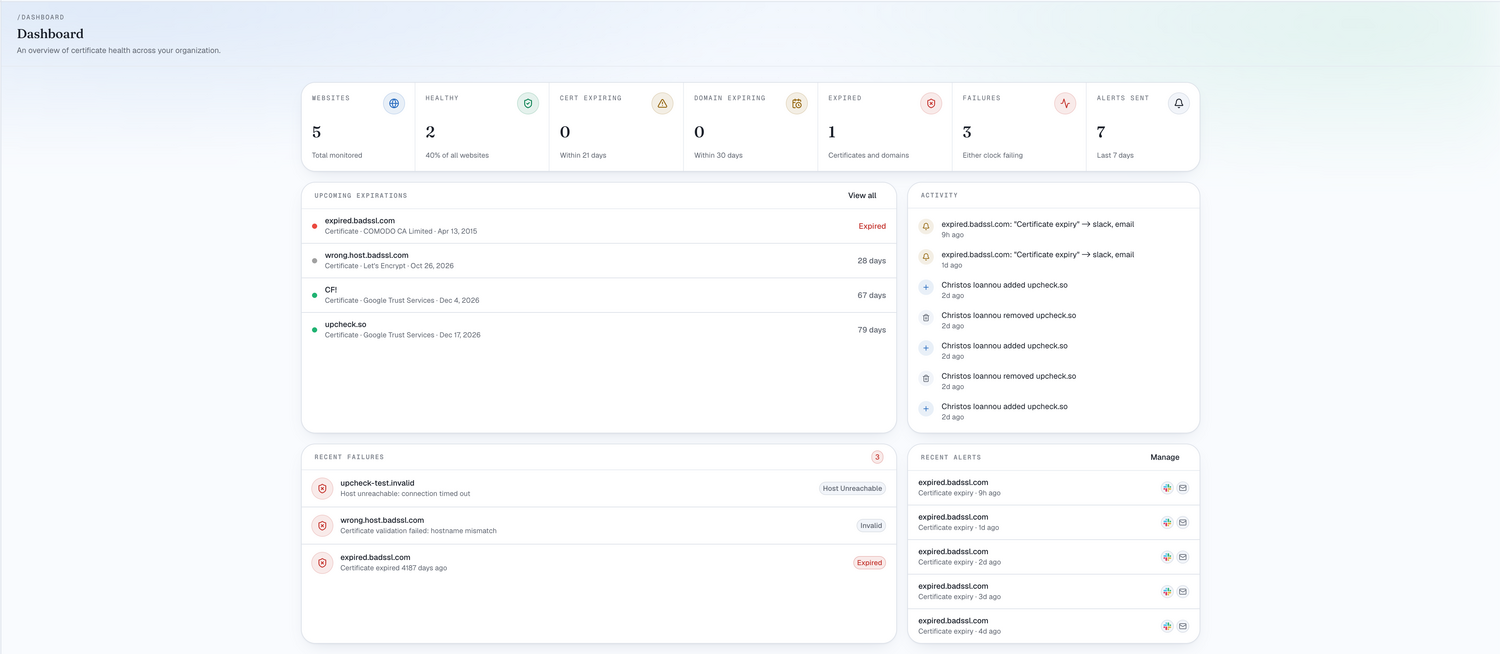
Upcheck reads the certificate every twelve hours and stays silent in between. You decide which of the 30, 14 and 7-day thresholds you want, per site or across all of them. Issuer, SANs, serial and chain are recorded the moment it appears. The first heads-up arrives while renewal is still a routine Tuesday task, a second word goes to whoever actually owns the site, and a last call reaches every channel you chose — and no more than that. Then it’s back to green, with the change written into the activity feed.
One dashboard shows uptime every five minutes — with a path, headers and an expected status when it’s an API — alongside certificate status like 68 days, 81 days or 12 days of cover.
Watch my sites.

AMA with Maker (0)